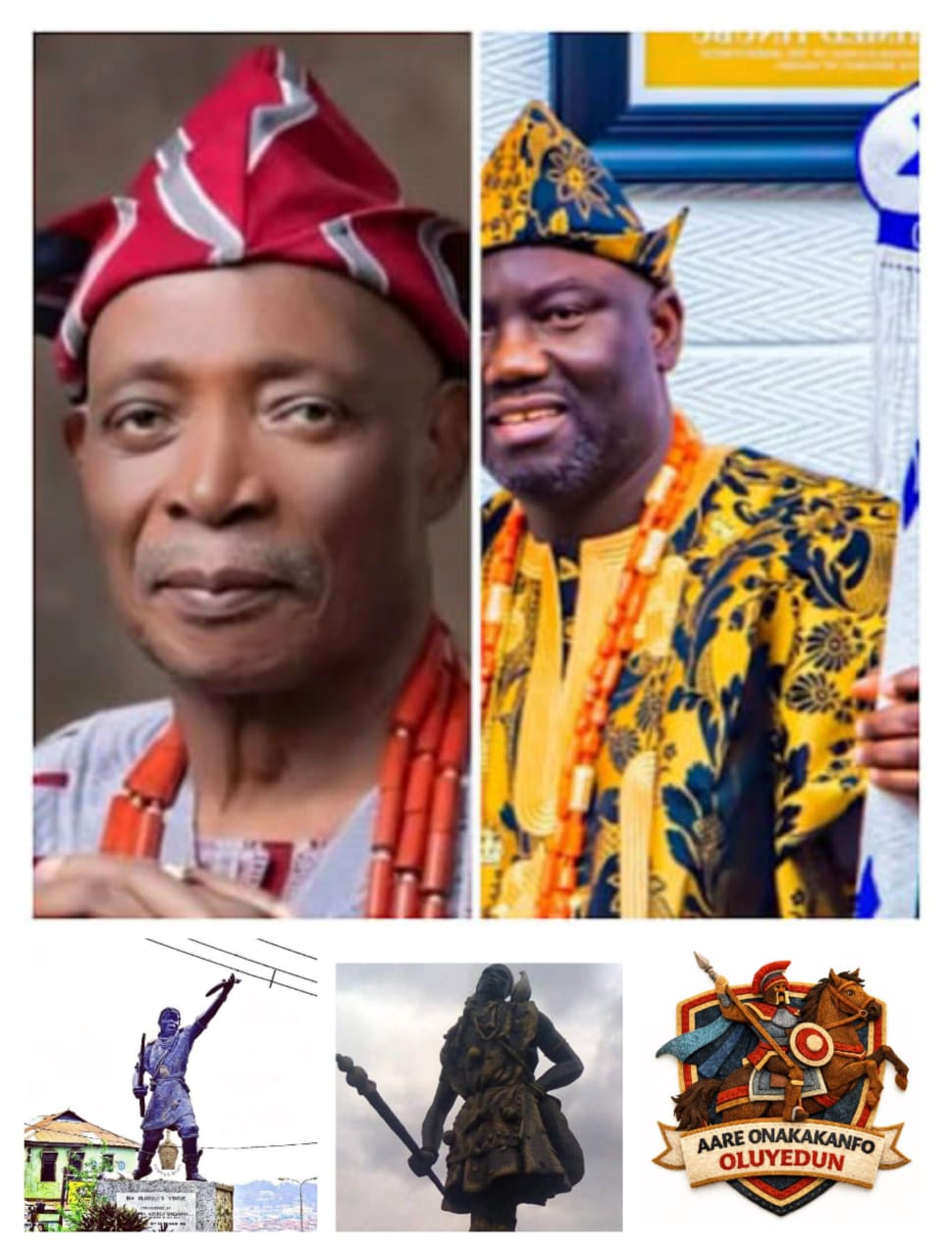
The Disintegration of Old Oyo and the Collapse of its Central Authority System
The period between 1835 to 1893 marked a significant turning point in the history of Yorubaland, as the once-mighty Oyo Empire crumbled, paving the way for the rise of Ibadan as a dominant power. By 1835, it was clear that the Oyo Empire was in decline, and its central authority system was on the verge of collapse. Amidst the chaos, Ibadan, one of the successor states, had solidified its grip on power in Yorubaland.
Ibadan’s military prowess and political influence made it the most prominent state in the region, surpassing other successor states like Ilorin and Abeokuta. By 1840, it was evident that Ibadan was the most capable state to succeed Oyo and defend Yorubaland against external threats, particularly the Fulani attacks from the north.
Under the leadership of powerful warrior-statesmen like Oluyedun, Lakanle, Oluyole, Oderinlo, Olugbode, Ibikunle, Ogunmola, Akere and Are Latosa, Ibadan expanded its territories, establishing a vast empire that stretched across Yorubaland. The city’s strategic location, coupled with its military strength, enabled it to control the flow of trade and commerce in the region.
The rise of Ibadan marked a new era in Yorubaland’s history, as the city became a beacon of hope for those seeking refuge from the instability and insecurity that had engulfed the region. As the most powerful state in Yorubaland, Ibadan played a crucial role in shaping the region’s politics, economy, and culture, laying the foundation for its enduring legacy in Nigerian history.
Basorun Oluyole emerged as a key figure in Ibadan’s history after the Eleduwe war, playing a crucial role in shaping the city’s identity. Oluyole, along with Kurunmi, supported Prince Atiba’s ascension to the throne of the new Oyo (Ago-doyo), and in recognition of their contributions, Alaafin Atiba conferred the titles of Aare Ona Kakanfo and Basorun on Kurunmi and Oluyole, respectively.
The Battle of Osogbo in 1840 marked a turning point, as Ibadan solidified its position as a dominant military and political force in Yorubaland. This victory made it clear that Ibadan was poised to become the champion of Yorubaland, a reality that the Alaafin had come to acknowledge.
In an attempt to curb Ibadan’s growing influence, Alaafin Atiba instigated Aare Kurunmi against Ibadan, leading to the Batedo War in 1844. However, the war’s inconclusive outcome only strengthened Ibadan’s position, and its war chiefs gained prestige. The war showcased Ibadan’s military capabilities, making it clear that the city-state was a force to be reckoned with in Yorubaland.
Basorun Oluyole opposed the traditional practice of killing the Aremo, showing Ibadan’s divergence from certain Oyo customs. This stance highlighted Ibadan’s pragmatic approach to governance and its willingness to challenge outdated traditions.
Notably, Ibadan wasn’t interested in dominating Oyo; in fact, it secretly supported Alaafin Atiba’s son, Aremo Adelu (great-grandfather of the current Alaafin Owoade), to succeed him, contrary to tradition, before Atiba’s death in April 1859. This move demonstrated Ibadan’s influence in Oyo’s affairs and its preference for a more stable succession process. By backing Aremo Adelu, Ibadan aimed to maintain its advantageous position in the region while avoiding direct confrontation with Oyo.
In fact, Ibadan warlords organized a secret ceremony to crown Prince Adelu as Alaafin, showcasing their significant influence in Oyo’s affairs. Unfortunately, Alaafin Adelu lacked his father Atiba’s charisma and struggled to adapt to the changing landscape of the 1860s. This led to his indecisiveness on Ibadan-related matters, notably during the 2nd Ijaye War in 1860, where he hesitated to take a stance against Ijaye despite secretly supporting them against Ibadan, ironic, given that his ascension sparked the conflict.
Aare Kurunmi had opposed Adelu’s succession, vowing to defend tradition, which underscores Ibadan’s crucial role in his accession. Kurunmi’s stance highlighted the tension between maintaining traditional norms and Ibadan’s pragmatic approach to power dynamics. Therefore, Alaafin Owoade should acknowledge Ibadan’s contributions and refrain from disrespecting the city-state, considering its pivotal role in shaping Oyo’s history and the Alaafin’s position. Ibadan’s actions demonstrated its position as a key player in Yorubaland’s politics, balancing power and tradition.
In 1875, Ibadan’s Aare Latosa intervened in the conflict between Alaafin Adeyemi I and Prince Lawani (great-grandfather of the current Alaafin Owoade), sending warriors to escort Prince Lawani and his family to safety in Ibadan. Latosa allocated land to Prince Lawani, now known as Oke Aremon, where he lived in exile for nearly 30 years (1876-1905). During this period, Prince Lawani (later Alaafin Agogoija) and his son Prince Siyanbola Ladigbolu (later Alaafin Ladigbolu) resided in Ibadan’s Oke Aremon, exiled until Alaafin Adeyemi I’s demise in 1905.
Conclusion:
- Alaafin Atiba pay back to Basorun Oluyole and Aare Kurunmi, for supported him to became Alaafin, 1837.
- After the installation of Adelu as Alaafin , Ogunmola usurped the title of Basorun from the incumbent ” GBENLA”, the first Basorun of the present OYO. Basorun as a special reward for his service in the 2nd Ijaye War. Ogunmola became Basorun in 1865 or 1866.
Second, Basorun Ogunmola demand the Aayan poles and Bere grass from Alaafin Adelu and Alaafin Adelu provides it, from that time, the place where they assemble the Aayan and Bere now changed it to BERE till now. - From Oba I. B Akinyele ( 1955-64 )
‘ Ni owuro Kutukutu ojo kan, ti se ojo ketala osu June, 1913, ( 13/06/1913 ), ni isale odo Alafara leba Ile wa, mori awon kan nto lo gere, pupo ti won po, ati iru eru ti won ru, mu ki enikeni, ti ko ba mo idi re tele bere pe iru awon eniyan wo ni won yi? nibo ni won ti wa? ati nibo ni won nlo? emi bere be, a si so fun mi pe, Ara Oyo ni won, ati pe won mu isin Odun wa, bi won ti ma se lati igba atijo lakoko Ogun, ti won ko si dekun se titi o fi di isisi yi’. Awon ti won ru eru na to bi ogofa, ( 120 people ).
Eniti o gba won, ti o si fi idapada Ebun ranse si Oyo, ( Return-Present ).
To my submission:
Alaafin should know that, Ibadan is Oyo, vis-a-vis a, Oyo is Ibadan.
Ibadan Agbe wa ooo.
Oyo ko ni daru ooo.
Extract
- By Akin Alao, Dept of History, O.A.U, Ile-Ife.
- Jide Fatokun, Fact and Figure
- Oba I.B Akinyele, Iwe Itan Ibadan
Complied by:
Prince Oluyedun Bello Babatunde Oyewumi JP.
IBADAN ICON.

 500
500